On the MOVE: Connecting community, learning and advocacy into one global youth movement
Meaningful youth participation is often understood as a single activity, a workshop, a campaign, or a consultation. But lasting engagement requires something more intentional. It requires creating a journey where young people connect with one another, strengthen their knowledge, and have opportunities to influence the conversations shaping the future of mobility.
That was the vision behind On the MOVE, a youth-led activation designed to bring together community engagement, capacity development, and advocacy into one connected experience for members of the Global Youth Coalition for Road Safety. Rather than treating these as separate activities, the initiative was designed as a continuous pathway, demonstrating how each stage can strengthen the next and create more meaningful opportunities for youth leadership.
The journey began with the On the MOVE Challenge, a global step-counting competition that encouraged Coalition members across all six WHO regions to experience sustainable mobility in their daily lives while connecting with peers around the world. Together, participants walked more than 1.15 million steps, transforming a simple challenge into a shared movement that brought young people together through a common purpose.
As the challenge built momentum, participants came together again for a live learning session on Sustainable Mobility and Pedestrian Safety: Back to Basics. More than a standalone webinar, it became the next step in the journey, strengthening participants' understanding of safer mobility while creating a shared foundation of knowledge that would prepare them for deeper engagement.
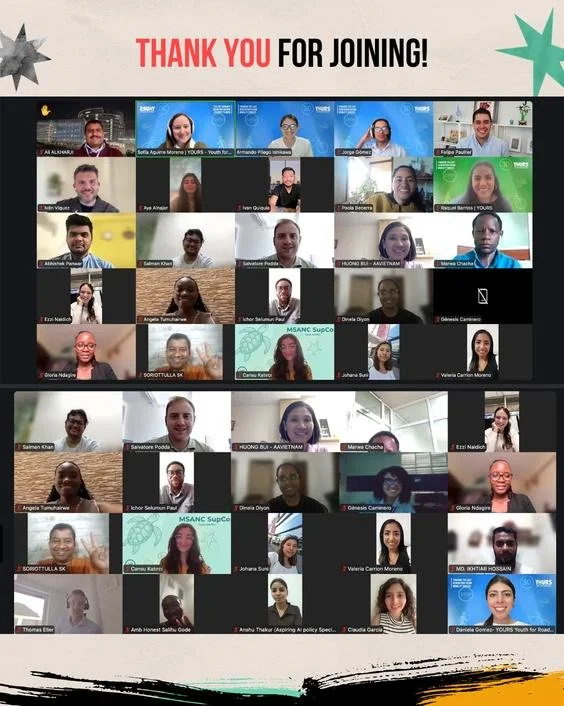
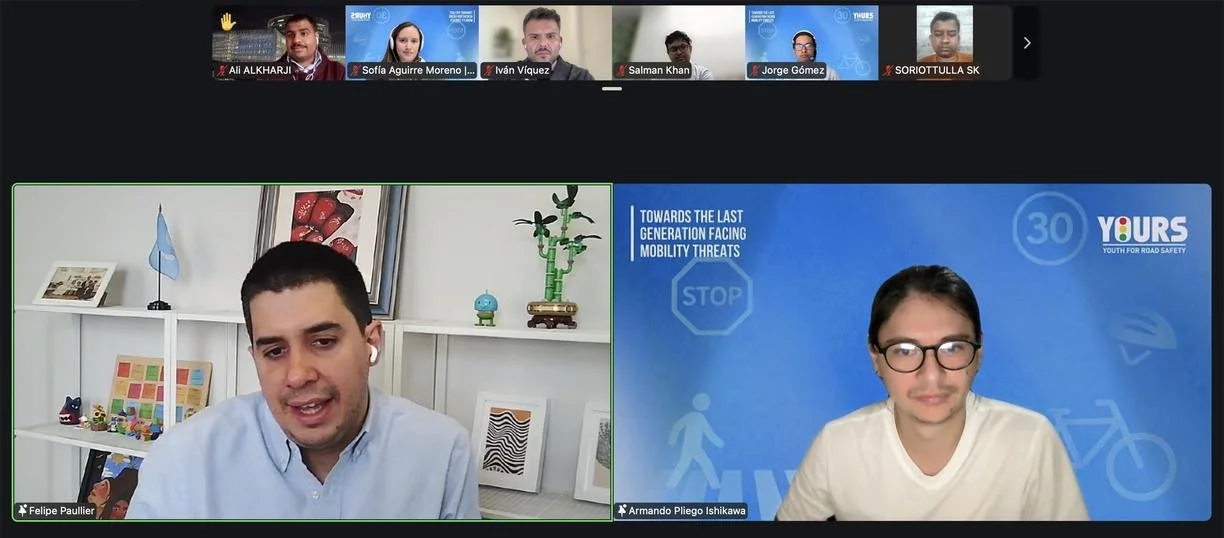
The activation culminated in Youth Shaping Mobility's Future, a live dialogue featuring Felipe Paullier, United Nations Assistant Secretary-General for Youth Affairs, and Armando Pliego Ishikawa, Regional Leader of the Global Youth Coalition for Road Safety. Bringing together 147 participants, including Coalition members, youth leaders, partners, and representatives from external organisations, the discussion explored what meaningful youth participation looks like in practice and why young people must be involved from the earliest stages of policymaking—not once decisions have already been made. Conversations focused on breaking institutional barriers, reframing road safety as a human issue, and strengthening intergenerational collaboration to build mobility systems that value life, dignity, and care.
The impact of On the MOVE extended beyond participation. The activation generated a 50% increase in activity on CoalitionHUB, welcomed 15 new Coalition members, and achieved a 97.5% satisfaction rate, demonstrating how connecting engagement, learning, and advocacy creates a stronger and more active community. Just as importantly, the concept itself originated from a Regional Leader before being scaled globally, reflecting the very principle it set out to promote: meaningful youth participation begins by trusting young people not only to participate, but to shape ideas, influence programmes, and lead change.
On the MOVE was never about counting steps or hosting individual events. It was about demonstrating a different approach to youth engagement—one that connects community, learning, and advocacy into a single journey. By creating opportunities for young people to engage, build their knowledge, and contribute to global conversations, the activation offers a practical example of how meaningful participation can move beyond consultation and become a lasting driver of leadership, collaboration, and systems change.